2026
How Expedia & IShowSpeed Just Rewrote the Rules of Travel Marketing
4 countries. 12 hours. 53 million viewers. And what every tourism brand and creator needs to learn from it.
Kayla G
Founder
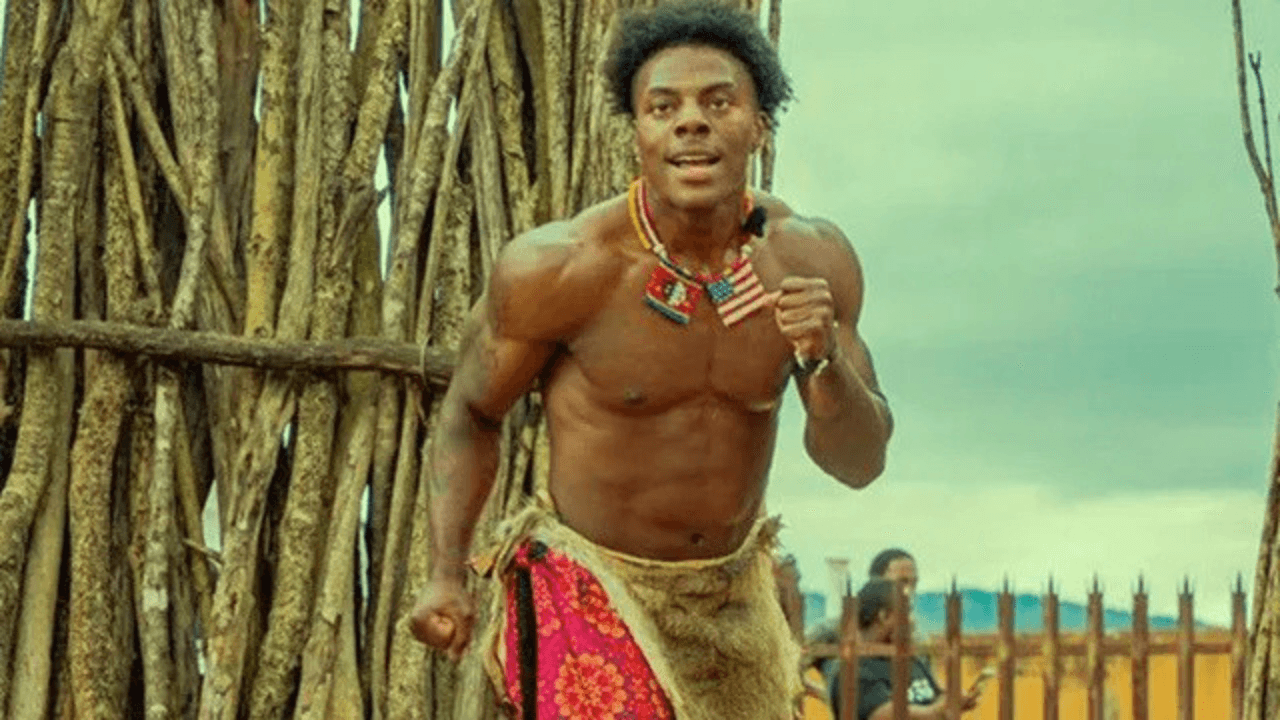
On April 29, 2026, travel marketing changed. Not incrementally, not a new ad format or a refreshed brand palette, but fundamentally. A 20-year-old streamer boarded a yellow-branded plane at 7:40am and didn't stop moving for nearly 12 hours. By the time he collapsed from exhaustion live on camera in St. Maarten, the clip had already gone viral. Expedia had their moment.
IShowSpeed, real name Darren Jason Watkins Jr., has built one of the most ferociously engaged audiences on the internet, roughly 150 million followers across platforms. His content is raw, chaotic, and unmistakably human. He gets genuinely excited. He struggles, falls, cries, laughs. His viewers don't just watch, they feel like they're along for the ride.
Expedia saw that, and instead of handing him a script, they handed him a passport.
Not a One-Off. A Yearlong Partnership Built Like a TV Show.
What makes the Expedia × IShowSpeed partnership remarkable isn't just the numbers. This wasn't a transactional brand deal where a creator reads a sponsor message at the 8-minute mark. It took six months to build. Expedia SVP of Global Communications Lauri Metrose compared the planning process to television production.
The brand came in with their eyes fully open, no restrictions, no guardrails, no list of topics to avoid. They gave Speed the freedom to be himself, because they understood that his authenticity is the product. Any attempt to sanitize him would have killed the very thing that makes him valuable.
Here's what the deal actually looked like:
Duration: A yearlong partnership, not a one-off campaign. Ongoing content, travel, and storytelling planned across multiple phases.
Restrictions: Zero. Expedia explicitly gave Speed no content guardrails. "We know who he is. We came into this eyes wide open."
Real-time distribution: Expedia had a war room of people clipping content live during the stream, pushing clips across social channels as the stream was still happening.
Branding: Bold yellow-branded planes, boats, jet skis, and dune buggies, Expedia's identity woven into every mode of transport, not just a logo at the end of a video.
"This is really about storytelling and exploring the world and then allowing people to book the trips that he has gone on." — Lauri Metrose, SVP Global Communications, Expedia
A Moment That Made History.
Speed became the first creator ever to visit four countries in a single livestream. The stream kicked off at 7:40am EST and ran for nearly 12 hours, spanning Dominica, Guadeloupe, St. Kitts and Nevis, and St. Maarten, all by air, land, and sea.
Stop 1 — Dominica: The Kalinago people welcomed Speed with a traditional ritual cleansing bath and gave him the Kalinago name Elayti, meaning strength. He donated his entire stream earnings to local flood recovery efforts, unscripted, unprompted, and immediately viral.
Stop 2 — Guadeloupe: Speed's arrival generated massive local energy and crowd turnout. The chaos was unpredictable, exactly what made it compelling viewing for millions watching at home.
Stop 3 — St. Kitts & Nevis: The stream peaked at roughly 53 million concurrent viewers when a local artist presented Speed with a painting. Moments like this, spontaneous, local, human, are impossible to manufacture with traditional advertising.
Stop 4 — St. Maarten: After nearly 12 hours of island-hopping, Speed collapsed from exhaustion mid-stream. The clip went everywhere instantly. Expedia's brand was in every frame.
How Expedia Turned 53 Million Viewers Into Potential Customers
Viral moments don't pay the bills. Views don't automatically become bookings. The question every tourism brand should be asking after a campaign like this is: how do we close the loop?
Expedia answered that question with infrastructure, a conversion layer built directly around Speed's audience. This is the part of the deal most coverage has ignored, and it's the most important thing to understand.
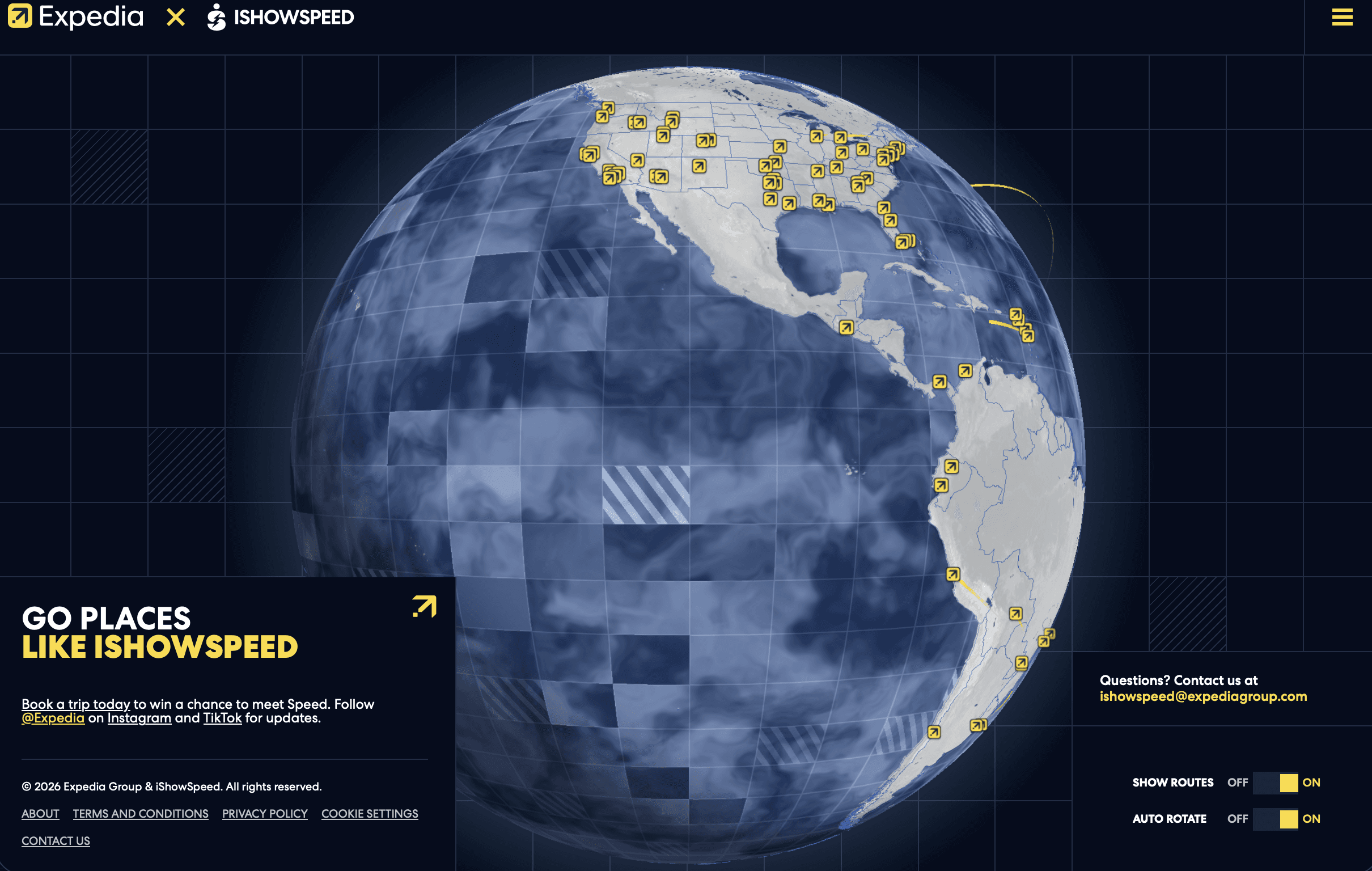
Interactive destination tracker: A dedicated website let fans see exactly where Speed had been, every island, every stop, every moment, with the implicit invitation to book those same trips through Expedia. Aspiration became action with one click.
Fan voting on future destinations: Fans could participate in choosing where Speed travels next. This kept the community invested between streams and gave them a reason to keep returning to the Expedia platform, not just for content, but as participants in the journey.
@Exspeedia_ TikTok account: A dedicated creator-brand TikTok account, not just Expedia's main channel, gave Speed's fans a space that felt native to their culture, not corporate. It extended the brand relationship into a content ecosystem that lives beyond any single stream.
Real-time clip distribution: The war room of social editors clipping during the live stream ensured viral moments hit social feeds within minutes, reaching millions who never watched a second of the original stream.
Bookable itineraries: Every destination Speed visited became a bookable trip on Expedia. Aspirational content became a direct commercial action with zero friction between inspiration and purchase.
This is the blueprint most brands haven't cracked yet: the creator is the top of the funnel, but the infrastructure is what converts. Expedia didn't just sponsor a stream, they built a system.
What This Means for the Creator Economy and IRL Events
IShowSpeed's Caribbean tour is the clearest signal yet that the creator economy has permanently shifted toward in-real-life content. Reaction videos, gaming streams, and studio content are being eclipsed by creators who actually show up.
This creates a massive opportunity for destinations, tourism boards, hotels, and local businesses. The audience for this kind of content is young, engaged, and they travel. Gen Z doesn't just watch travel content for entertainment. They use it as research.
For creators, this campaign sets a new benchmark for what a brand partnership can look like. The goal isn't to become a walking billboard, it's to bring your audience somewhere real, let them experience it alongside you, and build something that outlives the stream. These are stories people will still be talking about in two years.
For brands, the lesson is equally clear: the creator isn't your media channel. They're your co-producer. The brands that understand this and come to the table ready to genuinely collaborate rather than just place a logo, will win the next decade of marketing.
What Caribbean Destinations Need to Do With This Attention
The hard truth about viral tourism moments is that they have a half-life. Speed's stream generated 7 million views on the Dominican Republic alone. GoDomRep, one of the country's primary tourism social accounts, has 253,000 followers. The gap between the attention a creator generates and the local digital ecosystem's ability to capture it is enormous. That gap is where opportunity lives, and where most destinations are currently losing.
The real work is in building the infrastructure that converts global internet attention into actual tourism revenue. That means searchable, well-structured content for every local business that could benefit. If someone watches a clip from Cabarete and searches for surf lessons or boutique hotels, is there a business with an optimized site, real reviews, and a clear booking path? In most cases, no.
It means booking infrastructure that works at the moment of inspiration. The window between "I just saw that on TikTok" and "I'm going to book this" is narrow. If a hotel or experience doesn't have frictionless online booking, that moment closes.
And it means digital visibility built before the next viral moment happens, not scrambled together after it.
The Expedia × IShowSpeed model showed what's possible at the top of the funnel. The next layer of value gets unlocked when local businesses have the digital foundation to receive that traffic and turn it into revenue.
Three Things Every Brand Should Take From This Campaign
Give creators real freedom or don't bother. The most impactful moments of Speed's stream were the ones nobody planned. Brands that try to control creator content will get polished, forgettable content. Brands that genuinely trust their partners will get moments people share for years.
Build the conversion layer before you launch. Expedia didn't just sponsor a stream, they built a system. Interactive destination pages, a dedicated TikTok account, a real-time editing team, bookable itineraries. Every piece of infrastructure was designed to capture the energy of the stream and redirect it into a commercial outcome. The campaign and the conversion engine launched together.
Think partnership, not placement. Six months of planning. A yearlong commitment. A brand and a creator who built something together rather than exchanging money for a mention. That depth is what produced content authentic enough to reach 53 million viewers at peak. A logo on a banner can't do that. A real partnership can.
We work with hotels, destinations, tour operators, adventure brands, and experience brands to build the digital infrastructure and creator strategies that convert attention into bookings.
Want to build something like this for your brand or destination? Email us at hello@iguanagrowth.com